Exclusive
Double Standards and Silent Complicity: Why Africa’s Dictators Still Thrive in a World That Claims to Defend Democracy

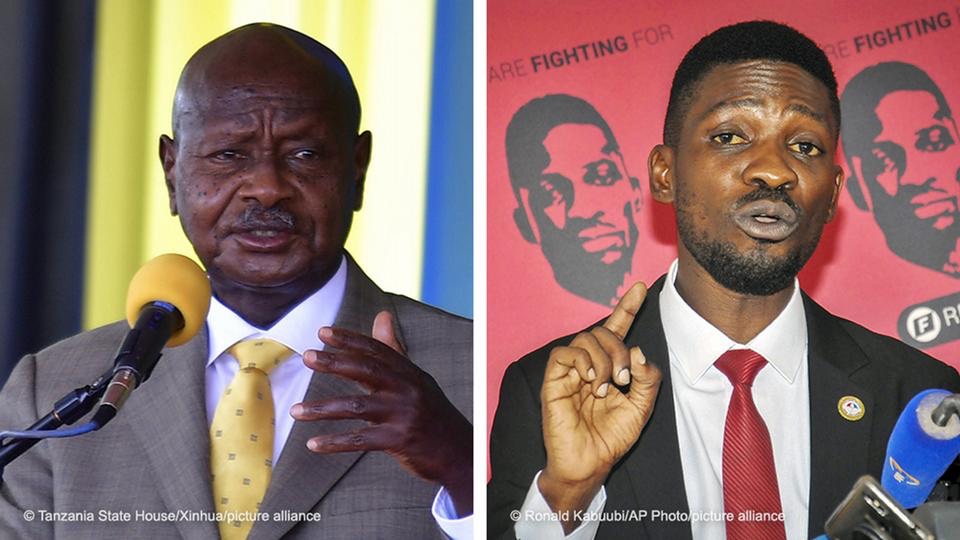
In a powerful address delivered at the One World Institute in Washington, Ugandan opposition leader Bobi Wine raised a question that continues to echo across continents:
“Why is the standard for human rights in Africa set so much lower?”
It is a question that cuts through decades of diplomatic language, exposing a global contradiction that many activists, scholars, and political observers have long warned about—the selective application of democracy.
According to the Freedom House Freedom in the World 2024 report:
Only 8 out of 54 African countries are classified as “Free.” Over 40% of African nations are rated “Not Free.” Political rights and civil liberties scores across Sub-Saharan Africa have declined consistently over the past decade.
Meanwhile, similar democratic violations in Europe trigger swift consequences
Across Europe, leaders are held to stringent democratic standards. When elections are manipulated or opposition voices suppressed, swift consequences often follow—sanctions, isolation, and global condemnation.
Take Alexander Lukashenko, widely labeled Europe’s last dictator. His government has faced severe sanctions and international pressure following disputed elections and human rights violations.
In contrast, as Bobi Wine pointed out, African leaders accused of similar—or worse—abuses often remain firmly in power, sometimes with active financial and military backing from Western governments.
In Uganda, under Yoweri Museveni, opposition leaders have been jailed, protests violently suppressed, and electoral processes repeatedly questioned by international observers. Despite this, Uganda continues to receive substantial foreign aid and maintains strong diplomatic ties with Western powers.
The Economics of Power: Aid Without Accountability
Actually Uganda, under Yoweri Museveni, illustrates this contradiction.
Reports from Human Rights Watch and Amnesty International have documented:
Arbitrary arrests and detention of opposition figures Violent crackdowns on protests Media suppression and intimidation
During the 2021 elections, Human Rights Watch reported that security forces killed at least 54 protesters in November 2020 demonstrations alone.
Yet, despite these findings, Uganda continues to receive substantial foreign assistance.
According to the World Bank:
Uganda receives over $2 billion annually in external financing and aid flows The United States alone has historically contributed hundreds of millions annually, particularly through health and security programs
This raises a critical question:
Why does aid persist without proportional accountability?
Aid Without Conditions: A Structural Contradiction
The International Monetary Fund and World Bank often emphasize governance reforms in policy frameworks. However, enforcement remains inconsistent.
A 2023 analysis by the Brookings Institution noted:
Aid conditionality related to democracy is frequently deprioritized in favor of stability and security cooperation Strategic allies often receive leniency despite governance concerns
Bobi Wine summarized this contradiction succinctly:
“When Western countries fund African dictators, it is called cooperation. But when we demand that aid be tied to democracy and human rights, we are dismissed as Western puppets.”
This paradox reflects a deeper geopolitical reality—strategic interests frequently override democratic principles.
Voices Across Africa: A Growing Chorus of Resistance
Bobi Wine is not alone.
Across the continent, a new generation of activists is challenging both domestic authoritarianism and international complicity:
Julius Malema has repeatedly criticized Western influence in African governance, arguing that economic control often undermines true independence. Ory Okolloh has spoken about governance accountability and the need for citizen-driven reform movements. Y’en a Marre movement has mobilized young people to resist political stagnation and demand democratic renewal.
These voices collectively point to a pattern: African instability is not only internally driven—it is also sustained by external tolerance of repression.
The Geopolitics Behind Silence
Why does this double standard persist?
The answer lies in strategic alliances.
African governments often serve as partners in:
Counterterrorism operations Regional security frameworks Resource access (oil, minerals, rare earth elements)
For Western powers, maintaining these relationships can take precedence over enforcing democratic norms.
This creates what analysts describe as a “stability over democracy” doctrine—where authoritarian regimes are tolerated as long as they ensure predictable cooperation.
A Question of Dignity, Not Dependency
Bobi Wine’s remarks also challenge a damaging stereotype:
“Whenever we come to countries like America, it shouldn’t be assumed that we are only here to ask for money.”
This statement reframes African activism—not as dependency, but as a demand for fairness, dignity, and equal standards.
It asserts that Africans are not passive recipients of aid, but active agents demanding accountability—both from their leaders and from the international community.
The Cost of Silence
The consequences of this global inconsistency are profound:
Entrenched authoritarian regimes Erosion of democratic institutions Youth disillusionment and migration crises Cycles of instability and conflict
When repression is tolerated in one region but condemned in another, it sends a dangerous message—that some lives, some freedoms, and some democracies matter less.
Toward a New Standard
The demand from African activists is not radical—it is simple:
Equal standards.
If election fraud, brutality, and repression are unacceptable in Europe, they must be equally unacceptable in Africa.
If sanctions are justified in one context, they must not be ignored in another.
And if democracy is truly a universal value, it must be defended universally—not selectively.
Conclusion: A Global Reckoning
Bobi Wine’s words are more than criticism—they are a call to action.
They challenge the international community to confront an uncomfortable truth:
the persistence of dictatorship in Africa is not just a failure of African leadership—it is also a failure of global accountability.
Until that changes, the promise of democracy will remain unevenly distributed—
and the question will continue to haunt global politics:
Why does freedom have different prices depending on where you are born?