Exclusive
Bobi Wine Named 2026 Hero of Democracy: What It Means for Uganda’s Struggle for Freedom
In a landmark recognition, Bobi Wine has been named one of the 2026 Heroes of Democracy by the Renew Democracy Initiative (RDI). This prestigious global acknowledgment honors individuals who demonstrate extraordinary courage in defending democratic values, human rights, and freedom, often at great personal risk.


In a significant shift in international recognition, Bobi Wine has been named one of the 2026 Heroes of Democracy by the Renew Democracy Initiative (RDI). This honor is aimed at individuals around the world who have shown extraordinary courage in defending democratic values, human rights, and freedom — often in the face of intense personal risk.
For millions of Ugandans who support him and yearn for change, this recognition is more than symbolic. It highlights the ongoing struggle for political freedom inside Uganda and raises the visibility of that struggle internationally — even as it underscores how difficult, complex, and unfinished that struggle still is.
About the Renew Democracy Initiative (RDI)
The Renew Democracy Initiative (RDI) is a non‑partisan, non‑profit advocacy organization based in the United States, founded in 2017 by former world chess champion and political dissident Garry Kasparov. RDI’s mission is to strengthen and “renew” liberal democratic values worldwide, counter authoritarian influence, and inspire informed citizen engagement in defending freedom.
RDI’s work includes:
- Education & Dialogue: Sharing articles, media, and hosting events that explain democratic principles and draw attention to threats — including misinformation, erosion of civil liberties, and authoritarian influence.
- Advocacy: Engaging global policymakers and thought leaders to support democratic reforms in countries under pressure.
- Support for Dissidents: Amplifying voices of activists and political leaders who are challenging authoritarian rule within their own countries.
- Humanitarian Aid: RDI sometimes supports democracies under duress with humanitarian assistance, particularly where conflicts or oppressive governance have worsened conditions for ordinary citizens.
Through these channels, RDI has become a platform not just for commentary, but for honoring and shining a spotlight on individuals who stand defiantly against authoritarian power.
“Honoring individuals like Bobi Wine shows that the world stands with those who fight for freedom, even under the greatest risk.” – RDI
Why Bobi Wine Was Honored
Bobi Wine’s life and political journey illustrate why he was chosen as a Hero of Democracy:
From Music to Politics
Born Robert Kyagulanyi Ssentamu in 1982, Bobi Wine rose from poverty in Kampala’s slums to become one of Uganda’s most successful musicians. His early music carried socially conscious messages that resonated with young people and poor communities alike. Over time, his platform transitioned from music to politics — driven by a desire to challenge systemic inequality and authoritarian control in Uganda, culminating in the founding of the People Power, Our Power movement, which seeks to unite Ugandans against corruption, state repression, and entrenched political elites.
Facing Harassment and Repression
Bobi Wine’s political activism has repeatedly brought him into conflict with the Ugandan state. He has faced arrests, intimidation, and violent reprisals from security forces. Opponents of his movement have been detained without explanation, and supporters have faced policing that critics describe as repression rather than law enforcement.
Unyielding opposition to entrenched rule
Despite repeated arrests, intimidation, and violent repression by state security forces, Bobi Wine has continued to challenge the political dominance of President Yoweri Museveni, who has ruled Uganda since 1986. Under Museveni’s leadership, state institutions — including the police, judiciary, and electoral bodies — have been criticised by international observers for failing to uphold democratic norms and fairness. The European Parliament has documented reports of harassment, intimidation and arrests of opposition figures and supporters during the 2026 post‑election period, even as Museveni was declared the winner of a seventh term.
Global advocacy and human rights spotlight
In February 2026, Bobi Wine addressed the Geneva Summit for Human Rights and Democracy, one of the world’s most respected international gatherings on human rights issues, a prominent global forum that convenes activists, former political prisoners, diplomats, and international advocates. From a remote location, he called for international attention and accountability for human rights abuses in Uganda, including threats, intimidation, and heightened security measures against opposition figures — explaining that even his family had been forced to seek safety abroad amid rising tensions.

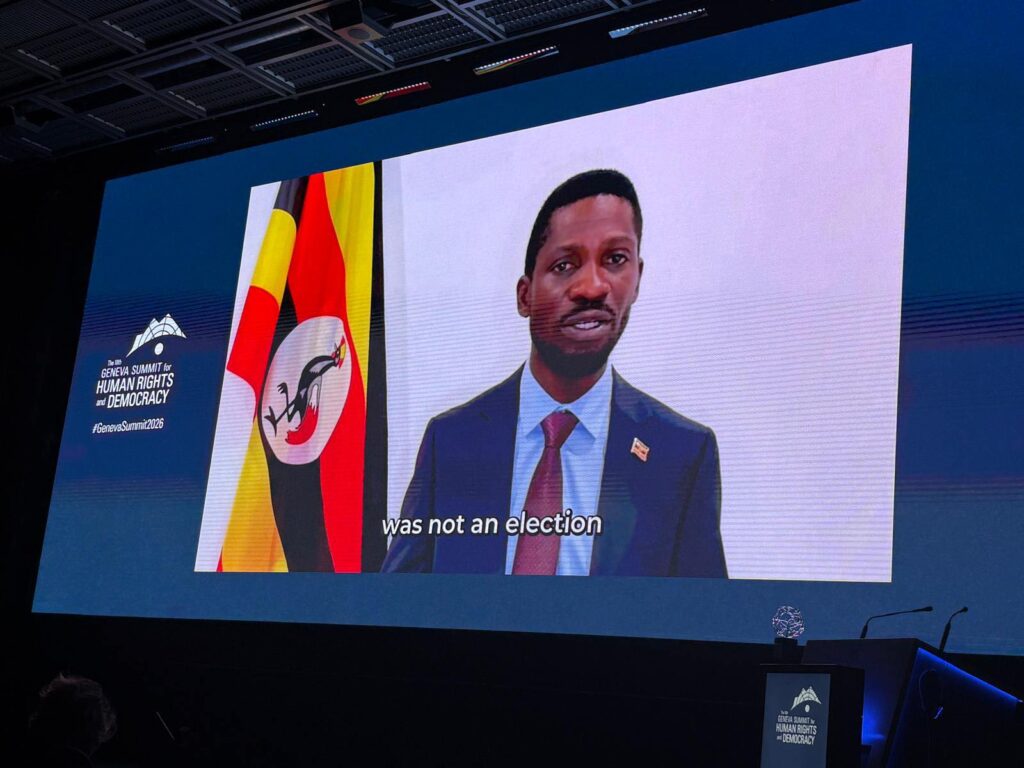
Ugandans are fighting not just for leadership change, but for the restoration of dignity and fundamental rights.” – Bobi Wine, Geneva Summit 2026
Calls for international action and accountability
At a session of the European Parliament, Bobi Wine urged the European Union to consider targeted sanctions against senior figures in Uganda’s security establishment — including Gen. Muhoozi Kainerugaba, the President’s son and powerful military commander — for alleged human rights abuses and the erosion of democratic processes in the country. He stressed that without international scrutiny and accountability, systematic authoritarian practices risk becoming normalized.
What It Means for Ugandans Who advocate for change
For ordinary Ugandans, Bobi Wine’s international recognition carries multiple layers of meaning, both hopeful and sobering:
1. Global validation of a domestic struggle
This award sends a powerful message: Uganda’s political crisis is not ignored internationally. For supporters, it affirms that their suffering, aspirations, and democratic demands reflect global principles of freedom and human rights.
2. Moral and psychological reinforcement
Symbolic recognitions from influential international groups help sustain morale among a population that has endured repeated cycles of repression. It reminds them that their cause is linked to universal aspirations for dignity and democratic governance.
3. International platforms amplify Uganda’s plight
Institutions like the European Parliament and Geneva Summit provide amplified visibility that helps shed light on events that may otherwise remain internal or underreported. These platforms elevate discussions on Uganda’s political environment and human rights record.
4. Potential diplomatic pressure
While constrained by geopolitics, international engagement — particularly statements and resolutions from bodies like the European Union — can impose reputational and political costs on governments that flout democratic standards.
5. Realistic limitations remain
Despite these positive dynamics, international recognition does not automatically transform domestic power structures. State control over electoral institutions, security forces, and political space remains firmly in the hands of Uganda’s ruling elite. Real change will still require sustained internal organisation, unity of purpose among citizens, and strategic political action.
The International Dimension: European Union and Geneva Summit Engagement
European Parliament Resolutions
In February and early March 2026, the European Parliament adopted resolutions expressing concern about the post‑election situation in Uganda, including allegations of intimidation, harassment and restrictions on political activities for opposition figures like Bobi Wine. These resolutions reflect growing European scrutiny of democratic backsliding in Uganda — a development that underscores the political costs of entrenched rule and how international actors are increasingly alert to it.
Geneva Summit Advocacy
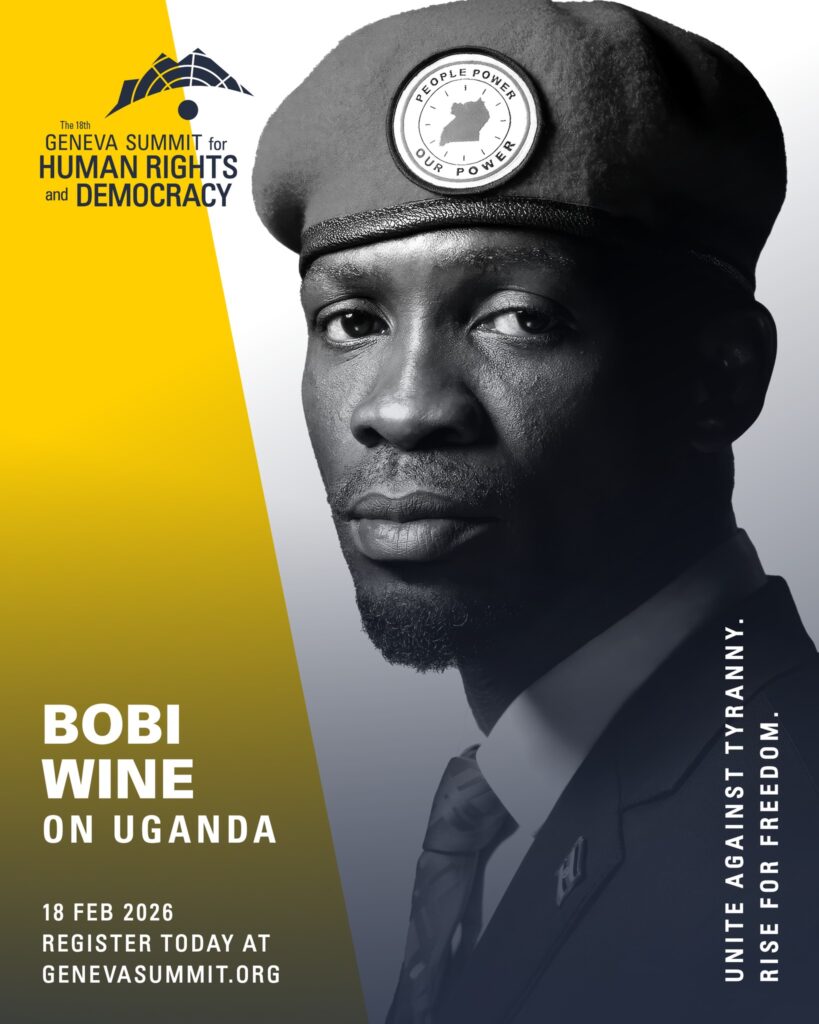
By addressing the Geneva Summit for Human Rights and Democracy, Bobi Wine leveraged one of the world’s most influential human rights platforms to bring firsthand testimony of repression and call for international accountability. His engagement at Geneva marked an important step in turning Uganda’s political narrative into a global human rights concern rather than a purely domestic political dispute.

Museveni’s International Lobbying and Diplomatic Efforts
While Bobi Wine works to internationalise Uganda’s democratic struggle, Yoweri Museveni’s government has also pursued its own global engagement strategies — often aimed at maintaining alliances, securing diplomatic support, and shaping foreign perceptions of Uganda’s political environment.
Lobbying in Washington and Global Capitals
Reports indicate that the Ugandan government has employed international lobbyists like Joseph Szlavik — a U.S.‑based consultant and lobbyist — to engage policymakers and influence perceptions in Washington. Such lobbying seeks to present Uganda in a positive diplomatic light, attract foreign investment, and counter criticism about governance and human rights from Western audiences.
Lobbying efforts like these aim to bolster Uganda’s diplomatic alliances and protect foreign partnerships, even as internal critics argue that such strategies prioritise image management over genuine democratic reform.
A Struggle Told at Home and Abroad
Bobi Wine’s recognition as a Hero of Democracy reflects more than personal honour — it signals a broadening of Uganda’s political story from a national struggle to a global human rights conversation. As the political crisis unfolds, international engagement — through civil society advocacy, European Union political scrutiny, and global human rights forums — complements the domestic push for democratic reform.
Yet the essence of Uganda’s journey remains rooted in the hearts, minds, and social mobilisation of its own people. International spotlight can illuminate the struggle, but the path to freedom depends on the unity, resilience, and strategic action of Ugandans themselves.