Exclusive
Bobi Wine Begins High-Level Meetings on Capital Hill Washington
Bobi Wine Begins High-Level Meetings on Capital Hill Washington
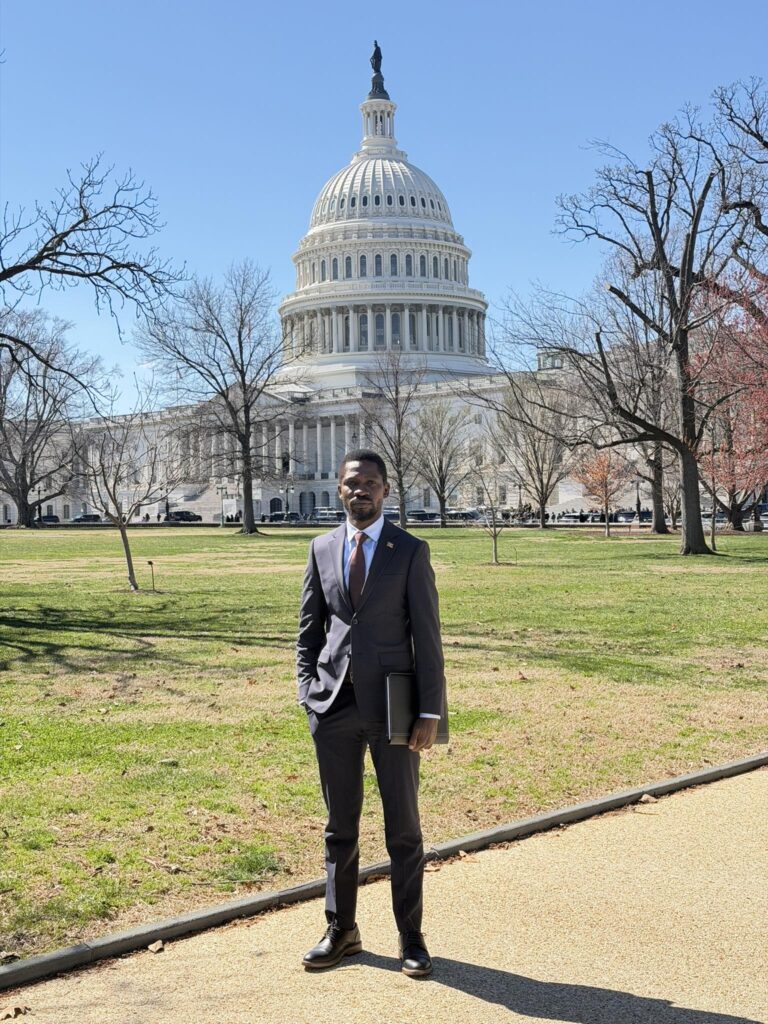
In a single image posted from Washington, D.C., Robert Kyagulanyi Ssentamuwidely known as Bobi Wine signaled a decisive shift in Uganda’s political struggle. Standing in front of the United States Capitol, dressed in a sharp, statesmanlike suit and holding a file, his message was simple but loaded: “Started my international engagements… #FreeUgandaNow.”
It was more than a photo. It was a declaration.
For weeks following Uganda’s deeply contested 2026 presidential election, Bobi Wine had been at the center of an intensifying political storm. His campaign unfolded under extraordinary pressure marked by arrests, violent crackdowns, and a heavy military presence that restricted his movements across the country. In the aftermath, he rejected the official results, dismissed the credibility of judicial redress, and challenged both Ugandans and the international community to confront what he described as a fundamentally compromised electoral process.
Now, his reappearance is not in Kampala—but in Washington.
For nearly two months, Bobi Wine remained out of public view, navigating what those close to him describe as a sustained and dangerous manhunt. Security forces reportedly conducted raids on homes of his associates, relatives, and political allies, searching for any trace of his whereabouts. Checkpoints, surveillance, and intelligence operations intensified across areas where he was believed to be.
This was not merely a political standoff. It was a high-risk environment in which the line between political pressure and personal danger appeared increasingly blurred.
During that period, his residence remained under tight control, effectively transformed into a restricted zone under military watch. Access was limited, movements monitored, and the space around his home carried the weight of a place no longer functioning as a private residence—but as a symbol of state power.
When communication eventually came, it was measured and deliberate. Bobi Wine confirmed that he had left Uganda but only temporarily. The message was carefully framed: this was not an exit from the struggle, but a repositioning within it.
Now, standing on Capitol Hill, that repositioning is fully visible. What stands out even more is the wording of his message: “Started my international engagements today with meetings on Capitol Hill, in Washington DC.” This is not casual language. It signals structure, intention, and continuity. The use of the word “started” suggests this is only the beginning of a broader international push. “Engagements” points to formal, organized interactions—not symbolic visits, but deliberate meetings.
By stepping into the international arena, Bobi Wine is redefining the scope of Uganda’s political crisis. No longer confined within national borders, Bobi Wine is effectively moving the Ugandan political question beyond national borders and into the arena of international diplomacy. The choice of location—the United States Capitol—is strategic. The symbolism of the location is deliberate, this is the heart of American legislative power, where foreign policy decisions are debated, shaped, and sometimes enforced.
This is where narratives shift—from local contestation to global concern.

At the same time, his presence there reflects a broader transformation in his political identity. He is no longer only an opposition figure resisting internal structures of power. He is positioning himself as a global advocate for democratic accountability, engaging institutions capable of exerting influence beyond Uganda’s internal mechanisms.
Yet, as with all such moments, the reaction has been immediate—and revealing.
Back home, a parallel narrative has already begun to take shape. Regime-aligned voices and propagandists have moved quickly to reframe his departure, attempting to portray it as abandonment, weakness, or political retreat. Media platforms sympathetic to the establishment have amplified these interpretations, questioning his decision to leave the country and seeking to dilute the significance of his international engagement.
This pattern is not unfamiliar. Across different political contexts, governments facing strong opposition often respond not only through force, but through narrative control—shaping perception as much as reality.
What is particularly striking, however, is where the loudest criticism is coming from. Many of those most vocal in condemning his departure are not neutral observers, but longstanding opponents. In many ways, their reaction underscores an uncomfortable truth: his absence from Uganda does not diminish his influence—it redistributes it.
If anything, it expands it.
Because while he may no longer be physically present within Uganda’s borders, his message has now entered spaces that are far more difficult to contain.
And this is where the deeper significance of the moment lies.
Bobi Wine’s journey from a heavily restricted campaign trail, through weeks of concealment under threat, to a public re-emergence on one of the world’s most powerful political stages, is not a story of retreat. It is a story of transition—from immediate survival to long-term strategy.
At the same time, the visual composition of the moment matters. His appearance—formal, composed, deliberate—projects authority and readiness. It suggests a leader not in retreat, but in transition. Not silenced, but repositioned.
This is not exile. It is recalibration.
For Uganda’s political landscape, this development carries significant implications. International engagement has the potential to amplify scrutiny on the government of Yoweri Kaguta Museveni, drawing attention from institutions such as the United Nations and the European Union, as well as from influential policymakers in Washington. It opens the door to conversations about diplomatic pressure, human rights accountability, and the legitimacy of electoral processes.
The risks that defined his final days in Uganda have not disappeared. His home remains under watch. His network continues to face pressure. The conditions that forced him into hiding still exist.
But the arena has changed.
From the streets of Kampala to the halls of Capitol Hill, the struggle has moved—carrying with it not just the weight of a disputed election, but the attention of a watching world.
And in that shift, a new phase has begun.