Exclusive
More Than Politics: Understanding Bobi Wine’s Powerful Statement on Identity and Leadership
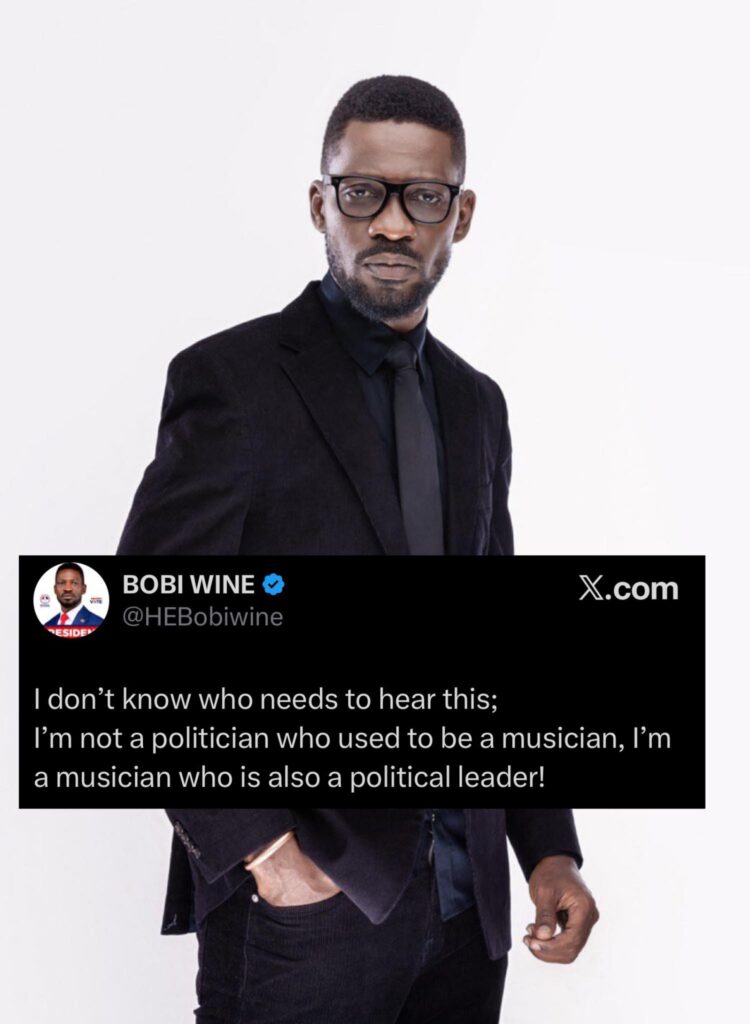
H.E Bobiwine on the 3rd of June 2026 posted on his X account “I don’t know who needs to hear this; I’m not a politician who used to be a musician, I’m a musician who is also a political leader,” This was much more than making a casual social media post. He reignited an important conversation about identity, leadership, and purpose.
In just a few words, H.E. Bobi Wine addressed a question that has followed him throughout his political journey: Is he a musician who ventured into politics, or a politician who left music behind?
His answer was clear, deliberate, and deeply significant.
A Statement About Identity
For many people, entering politics often means abandoning a previous profession and adopting a completely new identity. Businesspeople become politicians. Lawyers become politicians. Activists become politicians.
But Bobi Wine’s statement rejects this traditional thinking.
He is reminding the public that music is not merely something he used to do. It is not a chapter of his life that ended when he entered Parliament or became the leader of the National Unity Platform.
Music remains a fundamental part of who he is.
Before he stood on political platforms, he stood on concert stages. Before he addressed rallies, he addressed audiences through songs. Before he challenged government policies in speeches, he challenged social injustices through music.
His artistic identity did not disappear when he entered politics. Instead, it evolved into another form of public service.
In essence, Bobi Wine is saying that politics is something he does, but music is part of who he is.
His message is clear: leadership did not create him. Leadership emerged from the values, experiences, and convictions that were already present in the musician known as Bobi Wine.
Far from abandoning music for politics, he sees both roles as connected by a common purpose—to serve, inspire, and speak for the people.
That is why his statement is more than a tweet. It is a declaration of identity, a reminder of his roots, and a reaffirmation of the mission that has guided him throughout his public life.

Music Was Always About More Than Entertainment
Throughout his career, Bobi Wine used music as a tool to speak about social issues affecting ordinary Ugandans.
Many of his songs touched on themes such as poverty, unemployment, corruption, inequality, and the daily struggles of ordinary citizens. Long before he officially entered politics, he had already established himself as a voice for the marginalized and the forgotten.
This is why many of his supporters see his political career not as a sudden career change but as a continuation of the same mission.
The medium changed.
The message did not.
Where music once carried his voice, political leadership now provides another platform through which he communicates similar concerns.
Rejecting the “Just a Musician” Label
For years, critics have attempted to undermine Bobi Wine’s political credibility by referring to him primarily as a musician.
The implication is often that entertainers should remain in entertainment and leave leadership to traditional politicians.
This tweet appears to challenge that assumption directly.
By describing himself as “a musician who is also a political leader,” Bobi Wine is asserting that artistic achievement and political leadership are not mutually exclusive. He is rejecting the notion that one’s background determines one’s ability to lead.
History is filled with leaders whose influence began outside traditional political institutions. Some were teachers. Others were lawyers, military officers, religious leaders, writers, or activists.
Bobi Wine’s journey simply began through music.

Remaining Connected to His Roots
Another important message contained within this statement is the importance of remaining connected to one’s origins.
Political power often changes people. Positions, titles, and status can create distance between leaders and the communities from which they emerged.
Bobi Wine’s statement can be interpreted as a refusal to forget where he came from.
His music career connected him directly to ordinary citizens. Through concerts, lyrics, and public engagement, he experienced the hopes, frustrations, and aspirations of everyday Ugandans.
By continuing to identify himself as a musician, he signals that he remains connected to those roots despite occupying a prominent political position.
It is a declaration that leadership should not erase one’s history.
The Power of Authentic Leadership
At its core, this statement is about authenticity.
Many politicians spend years trying to craft an image that appeals to voters. Bobi Wine’s message suggests something different. Rather than reinventing himself, he presents his political leadership as an extension of the person he has always been.
The same individual who once inspired audiences through music now seeks to inspire them through leadership.
The same values that shaped his artistic work continue to shape his political vision.
The same voice that challenged injustice through song now challenges it through political action.
This continuity is what gives the statement its power.

His message resonates far beyond Uganda’s borders.
It speaks to anyone who has ever been told they must fit into a single category.
It challenges the idea that people should be defined by one profession, one title, or one chapter of their lives.
Human beings are multifaceted. They can be artists and leaders. Entrepreneurs and activists. Professionals and community servants.
Bobi Wine’s statement reminds us that growth does not require abandoning who we are. Sometimes, it simply means carrying our identity into new spaces and using it to serve a greater purpose.