Exclusive
When the Shepherds Fear Power More Than Truth: A Moral Crisis in Uganda’s Religious Leadership
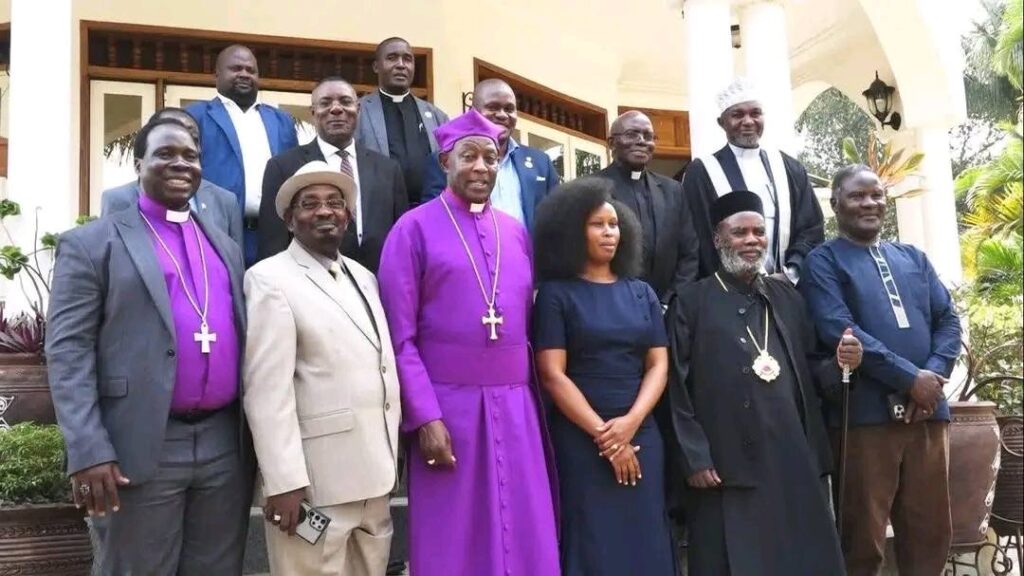
In the aftermath of Uganda’s deeply contested elections, Members of the Inter-Religious Council visited Barbara Itungo Kyagulanyi, the wife of opposition leader Bobi Wine, who was at the time under de facto house arrest following her husband’s dramatic escape from state surveillance.

Before the carefully staged visits,Hundreds of heavily armed soldiers had surrounded Bobiwines residence. Roads were blocked. Movement was restricted. His family—his wife, children, and staff—were placed under de facto house arrest without any court order, without any legal justification. It was not security. It was control.
According to accounts later confirmed by Bobi Wine himself, elements within the security apparatus—officers unwilling to be complicit in what they described as an impending operation—quietly tipped him off. There were plans to abduct him. And in Uganda’s recent history, abduction does not end in safety—it often ends in torture, disappearance, or death.
Faced with that reality, he made a decision not of politics—but of survival.
He escaped.
While he fled to safety, his wife, Barbara Kyagulanyi, remained behind—effectively detained in her own home, cut off, monitored, and surrounded by armed personnel.
This is the context in which members of the Inter-Religious Council later arrived.
To the public, it appeared compassionate. A pastoral visit. A gesture of care.
But what has since emerged—revealed by Bobi Wine during a town hall meeting at the Onero Institute on March 26, 2026—tells a different story.
They did not come only with prayers.
They came with a message.
They urged his wife to advise him “not to destabilize the country.”
They questioned whether he would be willing to sit down and talk with President Yoweri Museveni.
And in that moment, a painful question emerged:
Who, in truth, is destabilizing Uganda?
The Manufactured Narrative of “Destabilization”
To accuse Bobi Wine of destabilizing Uganda is to ignore overwhelming evidence—and to invert reality itself.
Uganda’s instability does not come from opposition voices. It comes from the very structures of power controlled by the state.
Consider the record:
1. Rigged Elections
Uganda’s elections have repeatedly been marred by:
- Ballot stuffing
- Voter intimidation
- Internet shutdowns
- Militarization of polling processes
The will of the people has been systematically undermined—not by the opposition, but by those in power.
2. Massacres and State Violence
Ugandans have not forgotten incidents such as:
- The November 2020 protests, where over 50 civilians were killed following the arrest of Bobi Wine
- The Kasese killings of 2016, where security forces stormed the Rwenzururu Palace, leaving over 100 people dead
These are not isolated tragedies. They are part of a pattern.
3. Abductions and Enforced Disappearances
The infamous “drone” vans became symbols of fear across Uganda—unmarked vehicles used to abduct citizens in broad daylight.
Many victims:
- Were held incommunicado
- Subjected to torture
- Or never returned at all
Families continue to search for answers.
4. Political Prisoners and Illegal Detention
Opposition supporters, activists, and ordinary citizens have been:
- Arrested without warrants
- Charged in military courts as civilians
- Detained for months or years without trial
Justice, in such cases, becomes a tool of repression—not protection.
5. Corruption Shielded by Power
While ordinary citizens suffer, corruption within the system remains deeply entrenched.
Officials accused of embezzlement and abuse of office are often:
- Protected
- Reassigned
- Or simply ignored
Accountability is selective—and power determines who is punished and who is shielded.

So Who Is Destabilizing Uganda?
Is it the unarmed citizen demanding democratic reform?
Or is it the system that:
- Deploys the military against civilians
- Silences dissent through fear
- Manipulates elections
- And protects corruption at the highest levels
The answer is not difficult.
Uganda is not destabilized by those who speak.
It is destabilized by those who refuse to listen—and instead use force.
The Misplaced Appeal for Dialogue
When religious leaders asked whether Bobi Wine was willing to “sit down” with Museveni, they echoed a familiar narrative—one that places equal responsibility on unequal actors.
But Bobi Wine’s position has never been one of refusal.
He has consistently stated:
- He is open to dialogue
- But not to transactional negotiations designed to co-opt opposition voices
- Not to discussions that ignore the suffering of Ugandans
What he calls for is principled, inclusive dialogue—one that addresses the root causes of Uganda’s crisis and involves all citizens on a question of How Museveni should go.
Because, as he has repeatedly emphasized:
“Only free people can engage in meaningful dialogue.”
And Uganda, under repression, is far from free.
A Crisis of Conscience Among Religious Leaders
This is where the issue becomes deeply troubling.
Religious leaders are not merely observers. They are meant to be moral authorities—voices of truth in times of injustice.
But in this case, their actions raise uncomfortable questions.
Why urge restraint from the oppressed, while remaining largely silent toward the oppressor?
Why caution those under siege, rather than confront those who laid the siege?
Why frame resistance as destabilization, but not state violence?
At what point does silence become complicity?
Fear of Power vs. Fear of God
The central question remains:
Do these leaders fear God—or do they fear power?
Because their actions suggest a troubling reality.
A leadership that fears God speaks truth—even when it is dangerous.
A leadership that fears power speaks carefully—so as not to offend those who command force.
In Uganda today, too many voices that should be prophetic have become cautious.
Too many that should challenge injustice have chosen to manage it.
Uganda’s crisis did not begin with Bobi Wine.
It did not begin with protests, or speeches, or calls for reform.
It began with a system that:
- Concentrated power in one man
- Militarized governance
- Undermined democratic processes
- And normalized repression
It is that system—and those who sustain it—that bear responsibility for the bloodshed, the fear, and the instability.
So when history asks:
Who is responsible for the killings?
Who turned homes into prisons?
Who forced a man to flee his own country to stay alive?
The answer will not lie with those who resisted.
It will lie with those who ruled through fear—and those who, in moments that demanded courage, chose silence.