Exclusive
Why Bobi Wine’s Appeal Reflects a Higher Standard of Pan-Africanism

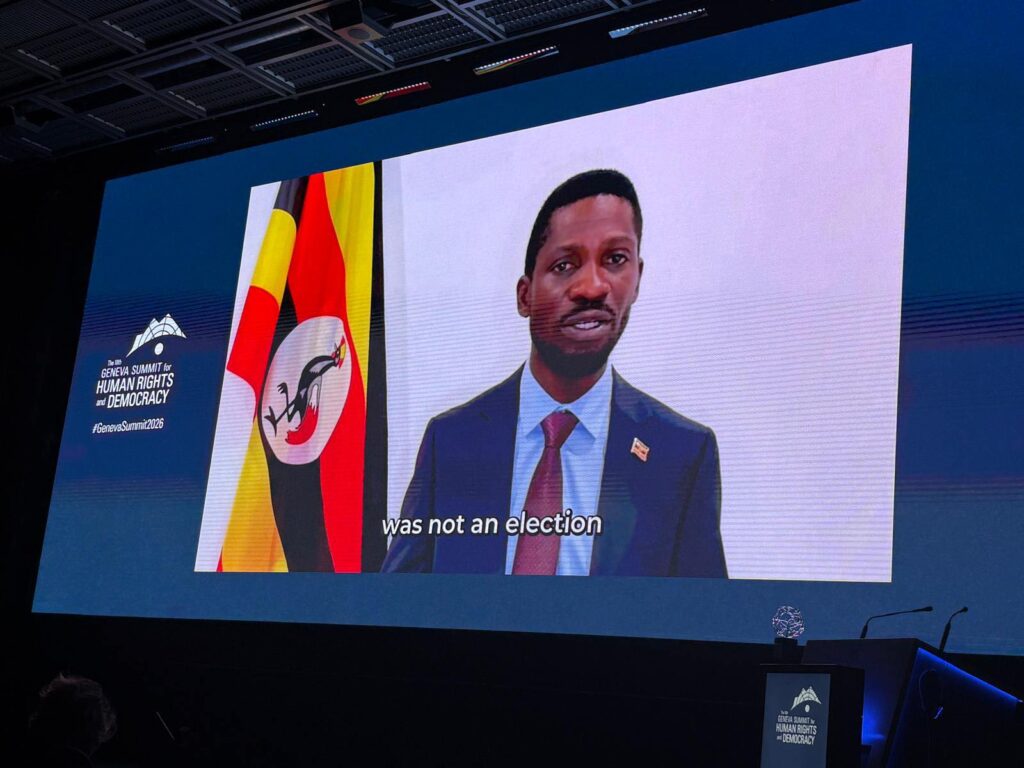
In contemporary African political discourse, few debates have proven as polarizing as the question of international engagement. At the center of this debate stands Bobi Wine, whose decision to engage policymakers in Washington has drawn criticism from some self-identified Pan-Africanists. Their argument is both familiar and emotionally resonant: African problems must be solved exclusively by Africans.
While this position carries an intuitive appeal rooted in sovereignty, dignity, and historical resistance to imperialism, it collapses under closer scrutiny. It fails to account for a critical and often uncomfortable reality: Africa’s political and economic landscapes are already deeply entangled with external power structures.
Reframing the Debate: What Bobi Wine Is—and Is Not—Asking For
A careful and honest reading of Bobi Wine’s position reveals a significant mischaracterization by his critics. He is not calling for foreign governments to intervene in Uganda’s domestic affairs, nor is he outsourcing the responsibility of African self-determination.
His appeal is far more measured, principled, and grounded in accountability:
- An end to unconditional financial assistance to the government of Yoweri Museveni
- A halt to military cooperation and security assistance that can be deployed against civilians
- A reconsideration of diplomatic legitimacy extended to regimes accused of systemic human rights violations
- A call for alignment between professed democratic values and actual foreign policy conduct
In essence, Bobi Wine is not asking for intervention—he is demanding ethical consistency.
To understand the legitimacy of this appeal, one must confront a foundational truth: many African governments do not operate in isolation.
Uganda, like several other nations, has for decades maintained strategic partnerships with global powers, particularly the United States. These relationships encompass:
- Substantial development assistance
- Security sector funding and training
- Intelligence cooperation
- Bilateral trade arrangements
- Diplomatic backing in international forums
These forms of engagement are not neutral. They actively shape the durability and capacity of the state.
During periods of electoral contestation in Uganda, security forces have repeatedly been deployed against opposition actors and civilians. Reports of excessive force—including arbitrary detention, suppression of assembly, and violent crowd control—have been widely documented.
Yet, these same institutions often benefit from foreign-funded training programs, logistical support, and operational partnerships.
This creates a troubling paradox:
External actors, while advocating for democratic norms, may simultaneously be reinforcing the instruments through which those norms are undermined.
Criticism of Bobi Wine often rests on a conceptual conflation—treating his appeal as a request for foreign intervention. This is a fundamental misreading.
There exists a clear and important distinction:
- Intervention implies external actors assuming an active role in resolving domestic political challenges
- Non-complicity demands that external actors refrain from enabling injustice
Bobi Wine’s position falls squarely within the latter.
A Simple Analogy
If an external partner is:
- Providing financial resources
- Offering military support
- Extending political legitimacy
Then that partner is already a participant in the broader political ecosystem.
Requesting that such participation adhere to ethical standards is not a surrender of sovereignty—it is an assertion of moral accountability within interconnected systems.
Authoritarian regimes derive significant advantage from the containment of dissent within national boundaries. When opposition movements remain localized:
- Information flows can be restricted
- Narratives can be controlled
- Repressive measures can be executed with minimal scrutiny
However, once domestic grievances enter the international arena, the calculus shifts.
Across multiple contexts, international exposure has led to:
- Targeted sanctions against political elites
- Suspension or conditional restructuring of foreign aid
- Diplomatic isolation
- Increased global advocacy and media coverage
These mechanisms do not immediately dismantle authoritarian systems, but they increase the political and economic costs of repression, thereby altering incentives over time.
One of the more contentious elements of Bobi Wine’s advocacy is his support for sanctions. Critics often portray sanctions as inherently anti-African or as tools of external domination. This perspective, however, overlooks the nuanced reality of targeted sanctions.
Targeted sanctions are designed to:
- Affect specific individuals or entities responsible for misconduct
- Limit access to international financial systems
- Impose travel restrictions
- Freeze assets linked to corruption or abuse
They are not aimed at punishing entire populations but at holding decision-makers accountable.
In various global contexts, targeted sanctions have successfully:
- Restricted the mobility of political elites
- Disrupted financial networks tied to corruption
- Signaled international disapproval in concrete, measurable ways
When applied judiciously, they serve as non-violent tools of pressure aligned with the pursuit of justice.
Exposing a Deeper Contradiction: Values vs. Interests
At a broader level, Bobi Wine’s engagement with international actors exposes a fundamental tension within global politics—the divergence between stated values and strategic interests.
Western governments frequently articulate commitments to:
- Democracy
- Human rights
- Rule of law
Yet, in practice, these commitments are often balanced against:
- Security partnerships
- Economic interests
- Geopolitical strategy
This produces a persistent inconsistency:
Governments that champion democratic ideals may simultaneously sustain relationships with regimes that contradict those ideals.
Bobi Wine’s appeal forces a confrontation with this contradiction.
The critique that engaging international actors undermines Pan-Africanism rests on a selective interpretation of the philosophy.
True Pan-Africanism is not merely about rejecting external influence—it is about defending the dignity, agency, and well-being of African people.
This requires consistency.
If it is acceptable for governments to:
- Receive foreign aid
- Engage in military partnerships
- Depend on international legitimacy
Then it must also be acceptable for citizens to:
- Seek international solidarity
- Demand accountability from external actors
- Utilize global mechanisms to support domestic struggles
To argue otherwise is to create a double standard that privileges power over people.
A Modern Understanding of Power and Resistance
In an era of globalization, power is no longer confined within national borders. Financial systems, security networks, and diplomatic relations operate across interconnected global frameworks.
As such, effective resistance must also evolve.
Bobi Wine’s approach reflects a strategic synthesis of:
- Local mobilization and grassroots activism
- Regional cooperation within Africa
- Principled international engagement
This is not a departure from Pan-Africanism—it is its adaptation to contemporary realities.
Ultimately, Bobi Wine’s message is neither radical nor unreasonable. It is, in fact, profoundly simple:
- Do not fund systems that suppress citizens
- Do not arm institutions that violate human rights
- Do not legitimize leadership that undermines democratic principles
He is not asking the world to solve Uganda’s problems.
He is asking it to stop contributing to them.
In doing so, he elevates the conversation beyond slogans and into the realm of principled, consistent, and globally aware Pan-Africanism—one that recognizes that true liberation requires confronting both internal oppression and external complicity.